Discovery of two-phase superconductivity in CeRh2As2
August 27, 2021




High-Resolution Miniature Dilatometer for Extreme Environments
"As a researcher at the Max Planck Institute for Chemical Physics
of Solids, I develop the instruments I use for my own high-impact
studies. My mission at IMT Kuechler is to provide the global physics
community with the same world-class technology that has enabled
breakthroughs published in Nature and Science."
Resolution: Down to 1 pm (0.01 Å) – achieving sub-atomic displacement
sensitivity.
Reliability: Proven in extreme environments and trusted by the world’s
leading research institutions.
Impact: Technology enabling breakthroughs published in Nature and Science.
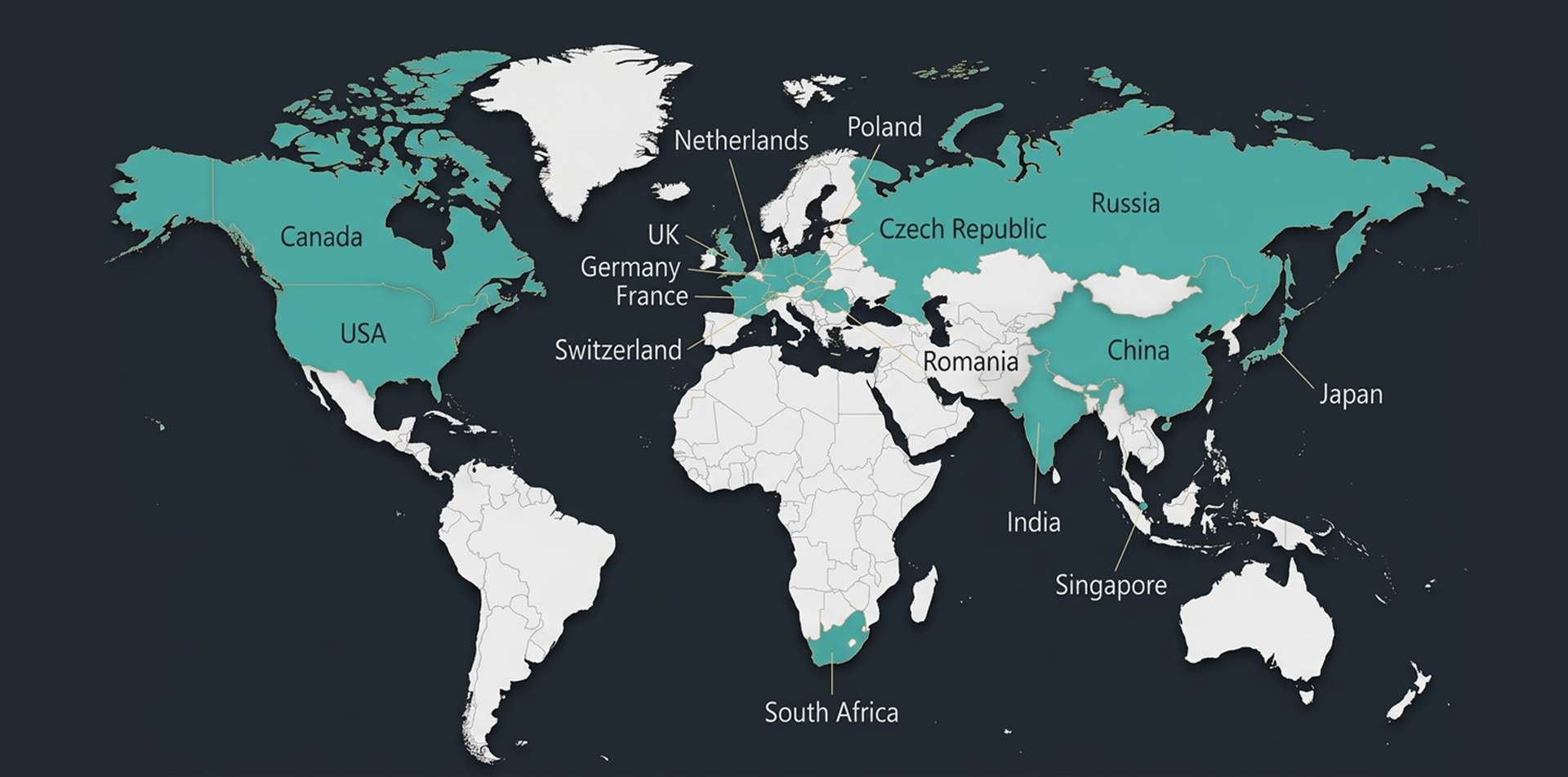
Our technology is the global benchmark for precision dilatometry, trusted by elite scientists across 16 countries. From high-field magnet labs to ultra-low temperature facilities, IMT Kuechler provides the reference instrumentation for precision dilatometry.
The definitive guide to high-precision, manual in-situ rotation within the PPMS® system.
 Manuals and Documentation:
Digital Edition – Optimized for screen viewing
Print Edition – Formatted for double-sided printing

The only dilatometer solution for angular measurements without sample warming. Achieve 1 pm (0.01 Å) resolution while maintaining base temperature throughout the entire rotation.
Ultra-Compact High-Resolution Cells for Confined Spaces.
These cells are the foundation of our success. While they are the
core of our In-situ Probe, they are also available as standalone
units for integration into your own experimental setups, dilution
refrigerators, or high-field magnets.
 See it in Action on YouTube.

Redefining precision: the world's smallest 1 pm capacitance dilatometer.

A cell identical in size to the Mini-Dilatometer, capable of applying up to 4 kbar of uniaxial stress,
corresponding to forces of up to 60 N on the sample.

For users of the Quantum Design PPMS® DR-Insert, we offer a specialized adapter and cabling solution. This allows you to bring our 0.01 Å resolution into the ultra-low temperature regime (T < 100 mK).
For Larger Samples and Extended Requirements
The Standard Series is designed for experiments requiring larger
sample dimensions than supported by the Miniature Series. It
accommodates samples of up to 5 mm in length while maintaining
excellent measurement resolution. The larger design enables
greater flexibility in sample choice, while naturally requiring more
space within the experimental environment.

A compact high-resolution capacitance dilatometer for measuring
thermal expansion and magnetostriction, accommodating larger
samples up to 5 mm in length.

A uniaxial stress capacitance dilatometer for high-resolution thermal
expansion and magnetostriction measurements, capable of
applying forces up to 70 N to the sample.

Our ultra-compact, high-precision dilatometers are engineered for space-constrained environments. They offer full compatibility with major commercial cryostats, specialized research platforms, and high-field facilities.

The great advantage of the new type of measuring cells is based on a unique
combination of powerful design, production technology and high level of manufacturing quality.
Size and Dimensions
footprint: 14 mm × 15 mm; height: 16 mm; weight: 13 g
Absolute resolution
@ low Temperature (Kelvinox-Systems (0.01 K up to 6 K)): ΔL = 0.01 Å
@ PPMS ΔL = 0.01 Å
Range of operation
Temperature range: 10 mK < T < 320 K
Magnetic field range: At least up to 38 T (max. tested field)
Measurable sample size
footprint (max.): (2.3 mm × 6 mm) or Ø = 3.3 mm
height: Less than 1 mm up to 2.75 mm
Materials
Dilatometer-parts: copper beryllium
Insulating pieces; washers: vespel; sapphire
Options
+ Pre-Wired Option: Available with specialized miniature coaxial cables for immediate use.
+ Any Cryostat: Dilatometer + attachments
+ PPMS: Dilatometer (can be rotated) complete with PPMS-probe and cables and software
+ Dilution Refrigerator Insert for the PPMS DynaCool: complete with two adapters, aluminium flange with built-in vacuum tight Fischer connectors, coaxial cables to connect Fischer connectors with capacitance bridge, software, coaxial cables for the inside of the DR Insert are supplied, but must be installed on its own in consultation with QD.

Modular Design: Both mini cells share the same footprint (14 × 15
mm). Our patented modularity allows you to switch between
pressure and zero-pressure modes by simply exchanging the main
body.
A comparison of the mini-stress dilatometer with the almost zero pressure mini-dilatometer: Each dilatometer consists of four main parts: (A) bottom part, (B)
main body, (C) cover, and (D) sample-adjusting tool. To apply additional uniaxial stress, just the main body (B) is different and has to be exchanged. The
stress cells in the main body contain four springs with a thickness of 0.5 mm instead of two springs with a thickness of 0.25 mm. Size and Dimensions,
Absolute resolution, Range of operation, Measurable sample size and used materials are exactly the same as for the Mini-Dilatometer.
Size and Dimensions
footprint: 14 mm × 15 mm; height: 16 mm; weight: 13 g
Absolute resolution
@ low Temperature (Kelvinox-Systems (0.01 K up to 6 K)): ΔL = 0.01 Å
@ PPMS ΔL = 0.01 Å
Range of operation
Temperature range: 10 mK < T < 320 K
Magnetic field range: At least up to 38 T (max. tested field)
Applied force: from 50 up to 65 N
max. uniaxial stress: 4 kbar for cuboid sample of (0.4 mm)2 cross section
Measurable sample size
footprint (max.): (2.3 mm × 6 mm) or Ø = 3.3 mm
height: Less than 1 mm up to 2.75 mm
Materials
Dilatometer-parts: copper beryllium
Insulating pieces; washers: vespel; sapphire
Options
Any Cryostat: Dilatometer + attachments
PPMS: Dilatometer (can be rotated) complete with PPMS-probe and cables + software
Dilution Refrigerator Insert for the PPMS DynaCool: complete with adapter, cables + software, coaxial
cables for the inside of the DILUTION REFRIGERATOR INSERT are supplied, but must be installed on
its own in consultation with QD.
Innovative patent-pending production method allows for an unprecedented resolution in a dilatometer of this
compact size.

Size and Dimensions
footprin: 20 mm × 26 mm; height: 34 mm; weight 45 g
Absolute resolution
@ low Temperature (Kelvinox-Systems (0.01 K up to 6 K)): ΔL = 0.02 Å
@ PPMS ΔL = 0.01 Å
Range of operation
Temperature range: 10 mK < T < 320 K
Magnetic field range: At least up to 30 T (max. tested field)
Measurable sample size
footprint (max.): (3.5 mm × 10 mm) or Ø = 5 mm
height: Less than 1 mm up to 5 mm
Materials
Dilatometer-parts: copper beryllium
Insulating pieces; washers: vespel; sapphire
Options
Any Cryostat: Dilatometer + attachments
PPMS: Dilatometer complete with PPMS-probe and cables + software

Size and Dimensions
footprin: 20 mm × 26 mm;; height: 41 mm; weight 52 g
Absolute resolution
@ low Temperature (Kelvinox-Systems (0.01 K up to 6 K)): ΔL = 0.02 Å
@ PPMS ΔL = 0.01 Å
Range of operation
Temperature range: 10 mK < T < 320 K
Magnetic field range: At least up to 30 T (max. tested field)
Applied force: from 40 up to 75 N
max. uniaxial stress: 3 kbar for cuboid sample of (0.5 mm)2 cross section
Measurable sample size
footprint (max.): (3.5 mm × 10 mm) or Ø = 5 mm
height: Less than 1 mm up to 5 mm
Materials
Dilatometer-parts: copper beryllium
Insulating pieces; washers: vespel; sapphire
Options
Varity of Cryostats: Stress-dilatometer + attachments
PPMS: Dilatometer complete with PPMS-probe and cables + software

Thermal expansion coefficient divided by temperature α/T measured along the c- and a-axis as a function of temperature at different uniaxial stresses applied parallel to the measurement direction. The stress was stepwise increased by reducing the samples cross-section.

Our dilatometer are optimized for minimal heat load and rapid thermalization, making them the preferred choice for mK-research:
Oxford Instruments Kelvinox (100 & 400):
We have successfully operated our dilatometers in Kelvinox systems over a temperature range from 20 mK to 6 K. They are compatible with custom adapters that allow the dilatometers to be mounted on a platform and mechanically rotated. Alternatively, they can be integrated with Attocube systems for electronic in-situ rotation.
Quantum Design PPMS® Dilution Refrigerator:
Fully compatible with the DynaCool DR-insert, providing high-resolution measurements from 60 mK to 4 K.
Cryogen-Free Systems:
Successfully tested in Cryogenic Ltd. systems down to 60 mK. We cooperate with the manufacturer to provide integrated dilatometer sensor solutions for these platforms.
We provide a complete solution for the entire PPMS range (PPMS-9, PPMS-14, EverCool, and DynaCool):
Temperature Range: Consistent performance from 1.8 K to 320 K.
Rotation Options: Our dilatometers are used both with our own In-situ Rotation Probe for changes at base temperature and with standard probes for manual angle adjustments at room temperature.
The ultra-compact design (14 × 15 × 16 mm) allows for measurements where space is the ultimate constraint:
Our high-precision dilatometers are an integral part of the user pool at the High Field Magnet Laboratory (HFML) Nijmegen. Our mini-dilatometer is used for thermal expansion and magnetostriction measurements in a 37.5 T Bitter magnet, designed to fit within a 15.2 mm diameter tube.
To use our dilatometer at HFML, please submit your request for magnet time via the central EMFL user portal.
While integrated in Nijmegen, the ultra-compact and robust design makes our dilatometers the ideal choice for high-field facilities worldwide.
Proven reliability in helium atmospheres from 5 K up to 300 K.
To achieve the ultimate resolution of 0.01 Å, our dilatometer are designed for the following conditions:
Media: Best performance is achieved in vacuum or steadyflowing inert gas atmospheres (Helium, Nitrogen, or dry air).
Mounting & Accessories: We offer matching adapters and specialized miniature coaxial cabling to ensure easy. integration into your existing cryostat or probe.
Versatility: Due to their robust design, our dilatometers are the reliable choice for any setup requiring high precision in confined spaces.

Our flagship rotation probe is engineered for researchers who demand the highest data integrity without the wait. Unlike standard setups that require time-consuming thermal cycles to change orientation, our system allows you to adjust the sample angle manually from the top of the probe instantly.
Identical Data Conditions: By staying at your setpoint (including base
temperature), you eliminate thermal drift and unintended changes to the
sample's physical state. Every angle is measured under the exact same
thermal conditions, ensuring your data is perfectly comparable across
the entire sweep.
No More Waiting: “Rotate in seconds, not hours.” Skip the tedious
temperature ramps and stabilization periods. Change the angle and
keep measuring immediately, ensuring your instrument time is spent on
science, not waiting.
Systematic Anisotropy Studies: The manual in-situ rotation (axis
normal to the direction of the applied field) allows for precise sample
orientation between -90° and +90° while maintaining extreme
mechanical stability.
 Experimental Evidence: This plot shows the magnetostriction of a 1 mm
NbP single crystal at 2 K, measured in a DynaCool system. The clearly visible
quantum oscillations (de Haas-van Alphen effect) demonstrate the
exceptional sensitivity of our probe.
Experimental Evidence: This plot shows the magnetostriction of a 1 mm
NbP single crystal at 2 K, measured in a DynaCool system. The clearly visible
quantum oscillations (de Haas-van Alphen effect) demonstrate the
exceptional sensitivity of our probe.
Rotation Range: -90° to +90° (Manual In-situ Top-Loading Control)
Possible Resolution: 0.01 × 10⁻¹⁰ m (Sub-Angström level)
Measurement Range Thermal Expansion and Magnetostriction: Operational Temperature 1.8 K to 320 K
Magnetic Field Range: 0 to 16 T
Sample Length Samples: up to 2.75 mm
Compatibility: Quantum Design PPMS®, DynaCool, and EverCool
Connectivity: Pre-installed high-fidelity coaxial cabling
Package Includes: Rotation Probe, Mini-Dilatometer, Cabling and Software
Sample size: up to 2.75 mm
Temperature range: 0.06 – 4 K
Magnetic field: 0 – 16 T
Resolution: 0.01 Å
Compatible with: Mini Dilatometer & Mini-Stress Dilatometer
The system is delivered as a complete, ready-to-integrate package:
+ Two mounting adapters for dilatometer orientation
(a) perpendicular to magnetic field
(b) parallel to magnetic field
+ Aluminium flange with vacuum-tight Fischer connectors
+ Two coaxial cables for connection to the capacitance bridge
+ Miniature coaxial cables for installation inside the DR-Insert
Installation Note:
Internal wiring inside the DR-Insert must be installed by the user in
coordination with Quantum Design (see also APPENDIX: INSTALLATION OF
THE MINI DILATOMETER IN THE QUANTUM DESIGN DILUTION
REFRIGERATOR in Rev. Sci. Instrum. 94, 045108 (2023).
Thermal Expansion:

Exceptional sensitivity demonstrated: The sharp λ-type anomaly at TN = 0.88 K highlights the ability to resolve very clearly smallest thermodynamic signatures.
Inset: Resolution down to ΔL = 0.01 Å under real measurement conditions in the
millikelvin regime using the PPMS® DynaCool DR-Insert.
Magnetostriction

Access complex magnetic phase diagrams: The measurement reveals three distinct magnetic phases in YbAlO3 with high
clarity.
Lower panel: High-resolution magnetostriction measured at T = 65 mK on a 1.74 mm single
crystal, demonstrating excellent performance deep in the millikelvin regime
Dr. Robert Kuechler
Innovative Measurement Technology Kuechler
Frankenstraße 13
01309 Dresden (Germany)
Phone: +49 (0) 351 46 46 23 24
E-mail: kuechler@dilatometer.info
VAT Number (USt.-IdNr.): DE285812663
Der Herausgeber übernimmt keine Haftung für Inhalte ausserhalb des Internetauftrittes von www.dilatometer.info.
Alle Elemente dieser Seite sind urheberrechtlich geschützt.
Eine Vervielfältigung jeglicher Art von Bild und Text bedarf einer schriftlichen Genehmigung durch den Herausgeber.

One of the organizers, Dr. Jeroen Custers and Dr. Franziska Weickert from Los Alamos National Laboratory discuss the benefits of dilatometry in Prague.

In the session "Novel techniques for SCES investigation" I introduced our patented dilatometry design and new applications in space lacking devices in my talk entitled "Ultra-high resolution capacitive dilatometry under extreme conditions"
Europe:
ETH Zürich, Max Planck Society, University of Cambridge,
Helmholtz-Zentrum Berlin (HZB), Paul Scherrer Institut (PSI), Leibniz
IFW Dresden, Heidelberg University, Université Grenoble Alpes, HFML Nijmegen
North America:
MIT, Stanford University, UC Berkeley, National High
Magnetic Field Laboratory (MagLab), Idaho National Laboratory (INL),
Université de Sherbrooke
Asia-Pacific:
University of Tokyo, National University of Singapore
(NUS), Peking University, Kyoto University, RIKEN, University of
Chinese Academy of Sciences (UCAS), Zhejiang University, Shanghai
University, IISc Bangalore
Africa:
University of Johannesburg


May 15, 2019

November 10, 2017


↘ Press release (English)
↘ Press release (German)
June 02, 2014


Rev. Sci. Instrum. 97, 025209, 2026
1/5 and 1/3 Magnetization Plateaux in the Spin 1/2 Chain System YbAlO3
Phys. Rev. Lett. 135, 076704, 2025
Coupling between magnetic and thermodynamic properties in RRh2Si2 (R = Dy, Ho)
Phys. Rev. B 109, 134408, 2024
Rev. Sci. Instrum. 94, 045108, 2023
Anisotropy-driven quantum criticality in an intermediate valence system
Nature com. 13 (1), 2141, 2022
Possible Quadrupole Density Wave in the Superconducting Kondo Lattice CeRh2As2
Phys. Rev. X 12, 122134, 2022
Field-induced transition within the superconducting state of CeRh2As2
Science 373, 1012–1016, 2021
Origin of the quasi-quantized Hall effect in ZrTe5
Nature Com. 12, 3197, 2021
Tracking Structural Phase Transitions in Lead-Halide Perovskites by Means of Thermal Expansion.
Adv. Mater. 31, 1900521, 2019
Negative Thermal Expansion in the Plateau State of a Magnetically Frustrated Spinel.
Phys. Rev. Lett. 123, 027205, 2019
Uniaxial stress tuning of geometrical frustration in a Kondo lattice
Phys. Rev. B 96, 241110 (R), 2017
Thermodynamic signatures of the field-induced states of graphite
Nature com. 8, 1337, 2017
Phys. Rev. Lett. 119, 126402, 2017
Quantum tricritical points in NbFe2
Nature Physics, doi:10.1038/nphys4242, 2017
Rev. Sci. Instrum. 88, 083903, 2017
Uniaxial-stress tuned large magnetic-shape-memory effect in Ni-Co-Mn-Sb Heusler alloys
Appl. Phys. Lett. 110, 071901, 2017
Rev. Sci. Instrum. 87, 073903, 2016
Thermodynamic evidence for valley-dependent density of states in bulk bismuth
Nature Materials 3909, 10.1038, 2014
k = 0 Magnetic Structure and Absence of Ferroelectricity in SmFeO3
Phys. Rev. Lett. 113, 217203, 2014
Ferromagnetic Quantum Critical Point in the Heavy-Fermion Metal YbNi4(P1-xAsx)2
Science 89, 000222, 2013
Rev. Sci. Instr. 83, 095102, 2012
Phys. Rev. B 85, 184408, 2012
Direct measurement of spin correlations using magnetostriction
Phys. Rev. B 83, 099901, 2011
J. Low Temp. Phys. 161, 2010
Kondo-Cluster-Glass State near a Ferromagnetic Quantum Phase Transition
Phys. Rev. Lett. 102, 066401, 2009
Systematic study of the Grueneisen ratio near quantum critical points
Sci. Tech. Adv. Mater. 8, 428, 2007
Quantum Criticality in the Cubic Heavy-Fermion System CeIn3-xSnx
Phys. Rev. Lett. 96, 256403, 2006
Thermal expansion and Grüneisen ratio near quantum critical points
Physica B 378, 36, 2006
Pressure effect on superconductivity in CeCoIn5-xSnx studied by thermal expansion
Physica B 378, 98, 2006
Peculiar quantum criticality in ferromagnetic CePd1-xRhx
Physica B 378, 648, 2006
Thermal expansion of CeCu5.8Ag0.2
Physica B 53, 359, 2005
Grueneisen Ratio Divergence at the Quantum Critical Point in CeCu6-xAgx
Phys. Rev. Lett. 93, 096402, 2004
Low-temperature thermal expansion and magnetostriction of YbRh2(Si1-xGex)2 (x=0 and 0.05)
J. Magn. Mater. 272, 229, 2004
Nature of the A phase in CeCu2Si2
Phys. Rev. Lett. 92, 136401, 2004
Divergence of the Grüneisen Ratio at Quantum Critical Points in Heavy Fermion Metals
Phys. Rev. Lett. 91, 066405, 2003
Dr. Robert Küchler has spent over two decades at the forefront of
condensed matter physics. This dual role as both a researcher and a manufacturer ensures that every instrument is optimized for the actual needs of high-end laboratories.
Global Authority: Recognized as one of the world’s leading
experts in thermal expansion and magnetostriction
measurements.
Innovation Hub: Leveraging the world-class infrastructure of
the Max Planck Society to develop and test the next
generation of dilatometry applications.
Scientific Impact: Primary author and contributor to over 40
high-impact publications (Nature, Science, PRL) based on selfdeveloped
dilatometry techniques.
2001 ~ Present
Mission: To provide international research labs with the world’s
highest-resolution miniature capacitance dilatometers.
Patented Excellence: Manufacturing instruments based on
patented technology that delivers 0.01 Å resolution in a
modular, ultra-compact design.
Global Standard: From initial designs published in Review of
Scientific Instruments (including five successive design and
application papers), our dilatometers have evolved into a
widely adopted standard, now used in over 16 countries,
including leading laboratories at Stanford, MIT, and Tokyo
University.
2012 ~ Present
We believe in direct exchange with the scientists who use our technology. Dr. Robert Küchler personally answers all customer inquiries and provides ongoing support and expertise for our instruments. He also regularly presents new dilatometry applications and designs at major international conferences. Two particularly notable examples are highlighted below.

Invited Talk: “Ultra-high resolution capacitive dilatometry under extreme conditions“

Exhibition: A week of intense discussions with the global community. Our exhibition stand served as a hub for experts to discuss the benefits of high-resolution dilatometry.
Precision that delivers results in the world’s leading
journals.
The reliability and resolution of our dilatometers are not just theoretical, they are proven by a vast body of scientific work. Our founder, Dr. Robert Küchler, has personally contributed as author or co-author to over 40 peer-reviewed publications using these instruments, ensuring that every design reflects real-world laboratory practice.

2 x Science, 5 x Nature Portfolio (Nature Materials, Nature Physics, Nature Communications), 10 x Physical Review Letters, 5 x Review of Scientific Instruments (The technical foundation of our designs)
A Global Standard in Dilatometry:
Beyond our own research, IMT Kuechler cells have been adopted
by leading laboratories worldwide. Our technical designs have
become the benchmark for high-resolution capacitive dilatometry,
as evidenced by the high citation impact of our core publications:
The Mini Dilatometer: Rev. Sci. Instrum. 88, 083903 (2017)
and Rev. Sci. Instrum. 94, 045108 (2023) – A rapidly growing
reference with over 50 citations to date.
The Standard Dilatometer: Rev. Sci. Instrum. 83, 095102
(2012) – A cornerstone of the field with over 100 citation
(CrossRef).
“Our instruments are designed by a scientist for scientists. We don't
just sell hardware; we provide the precision required for Science
and Nature-grade discoveries.”

Frankenstr. 13
01309 Dresden (Germany)
Phone: +49 (0) 351 46 46 23 24
E-mail:
kuechler@dilatometer.info